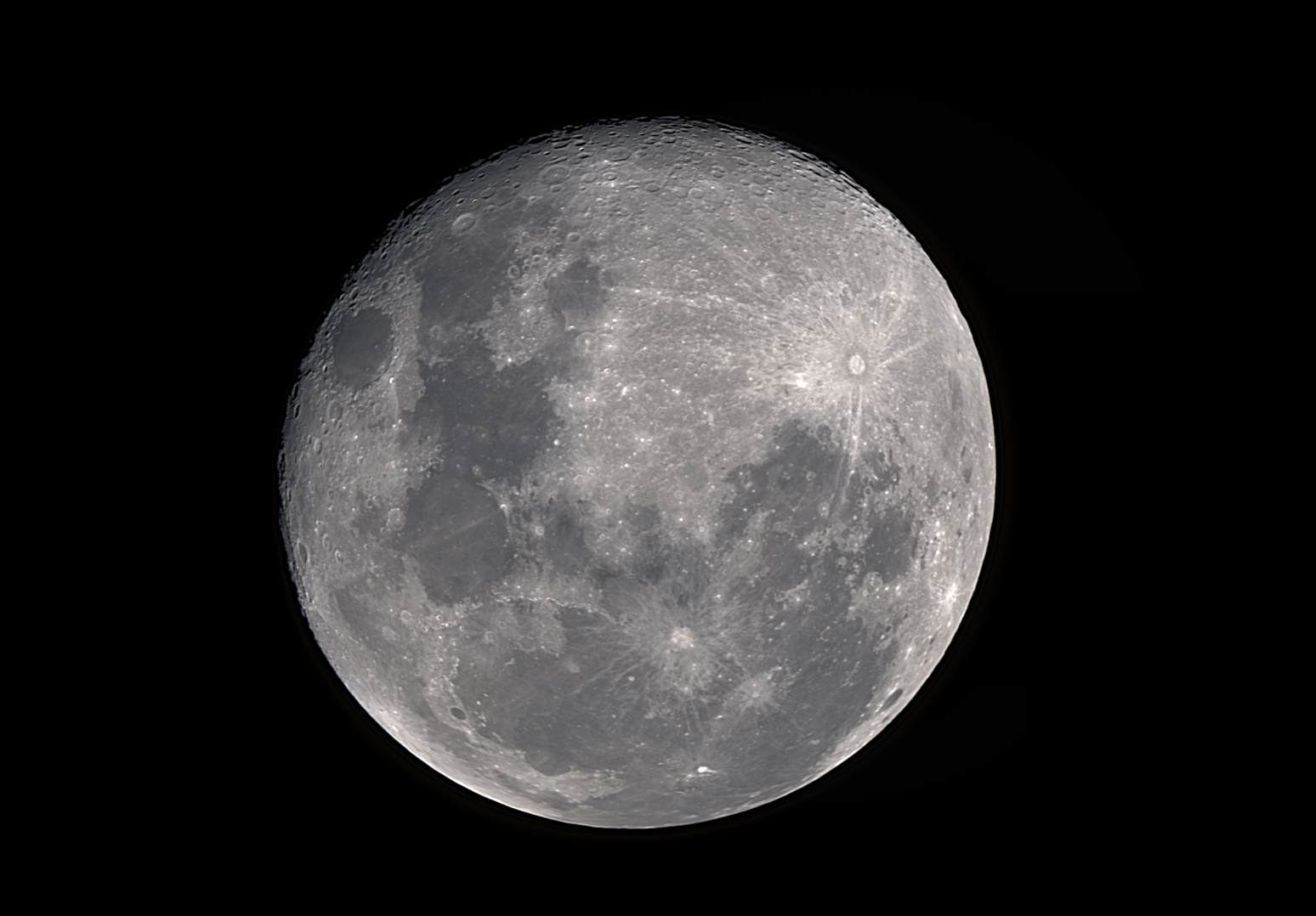
The Moon
The Moon is Earth’s only natural satellite, orbiting at an average distance of about 384,400 km and spanning roughly 3,474 km in diameter. Its surface is divided between the darker basaltic maria, formed by ancient volcanic eruptions, and the brighter, heavily cratered highlands, some of which date back more than 4 billion years. With virtually no atmosphere to scatter light or erode surface features, the Moon preserves impact craters, wrinkle ridges, and rilles in exceptional detail, making it an ideal and unforgiving subject for high-resolution imaging.
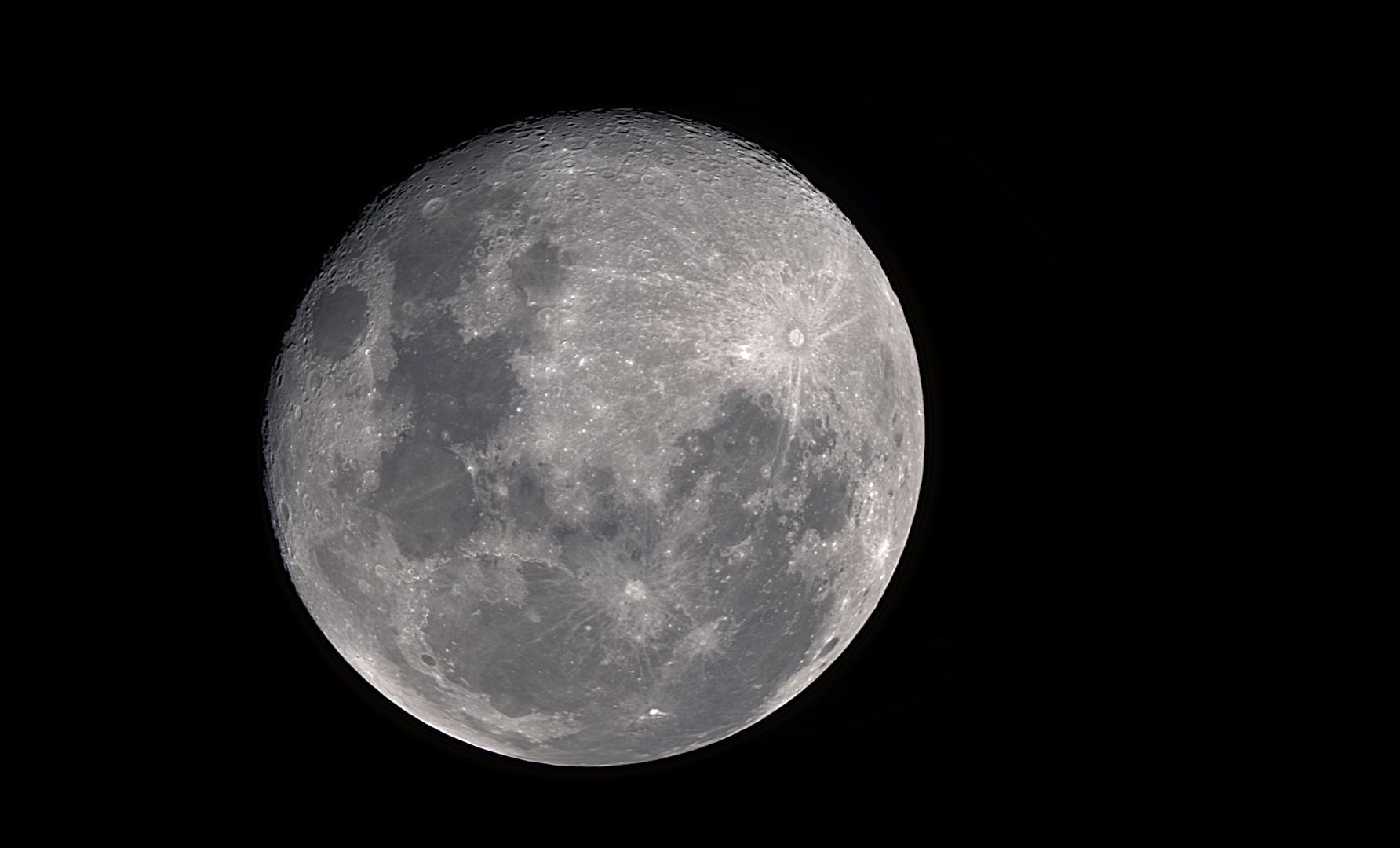
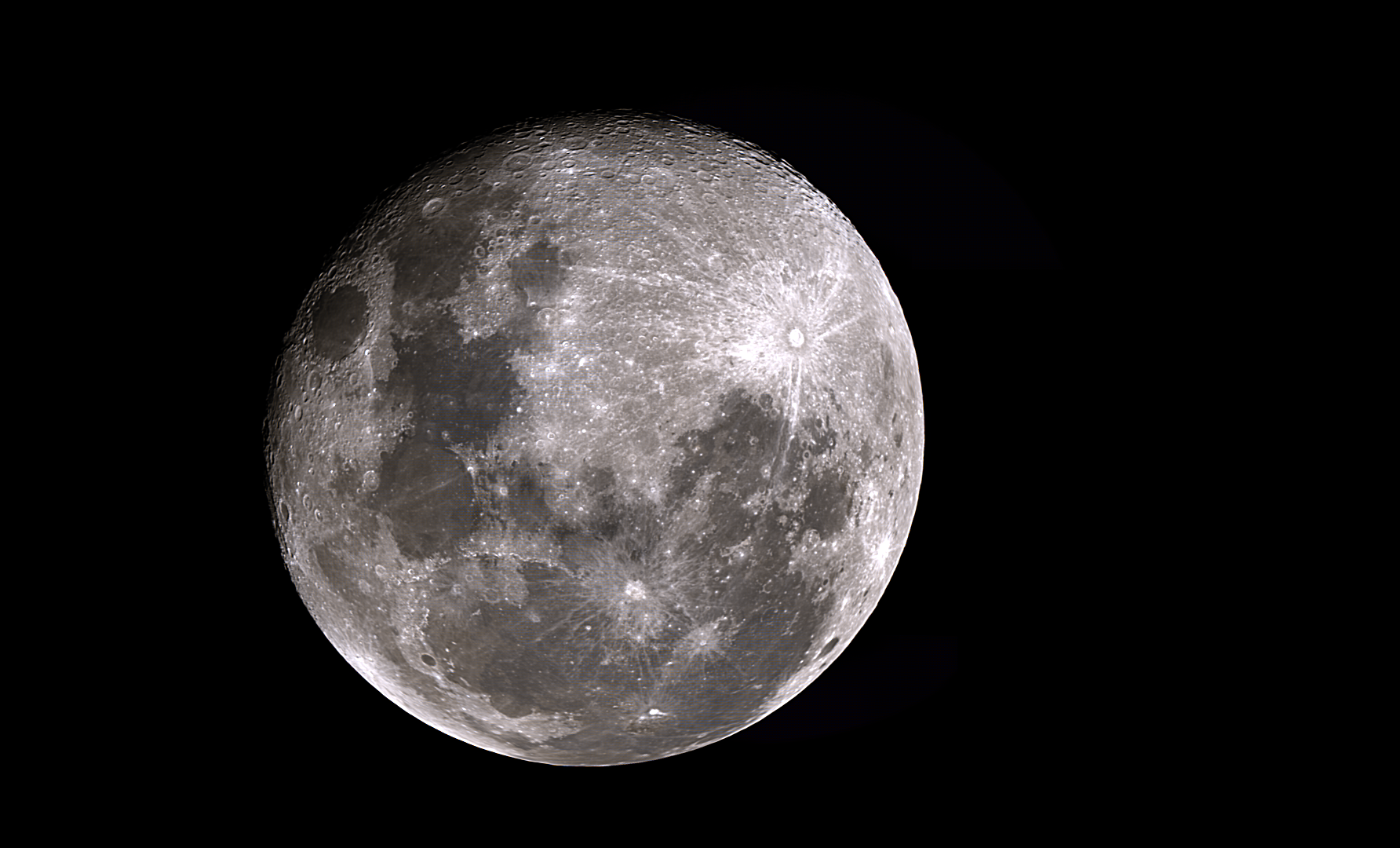
This image was captured at 99.4% illumination, on January 4th, 2026 just after the exact full Moon. At this phase, the Sun–Moon–Earth angle is very small, meaning sunlight strikes the surface almost perpendicularly. Shadows are minimal, reducing topographic contrast, but this geometry enhances photometric features: subtle albedo variations between maria and highlands, as well as bright ejecta ray systems from relatively young craters, become especially prominent. Near full phase, the Moon also exhibits the opposition effect, where the surface appears slightly brighter due to the reduction of shadow hiding and coherent backscatter.
You can download the full size high resolution image. Download (23 MB)
Taking a different stab of sharpening the data, a bit more aggresive version of the Moon. Download v2 (23 MB)
The image was captured using Sharpcap and processed using AutoStakkert and ImPPG described in the referenced video.